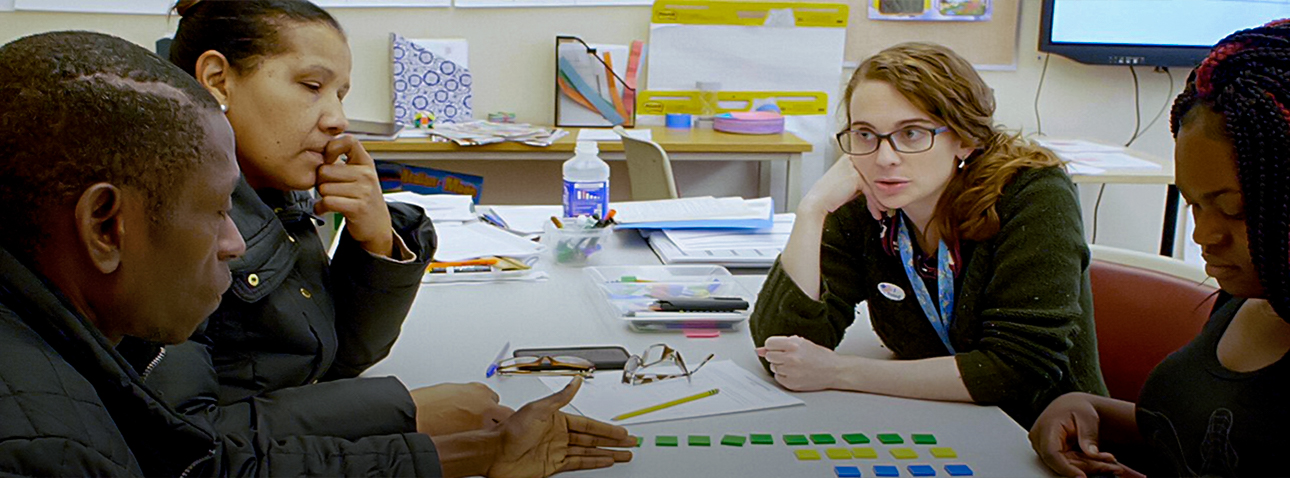

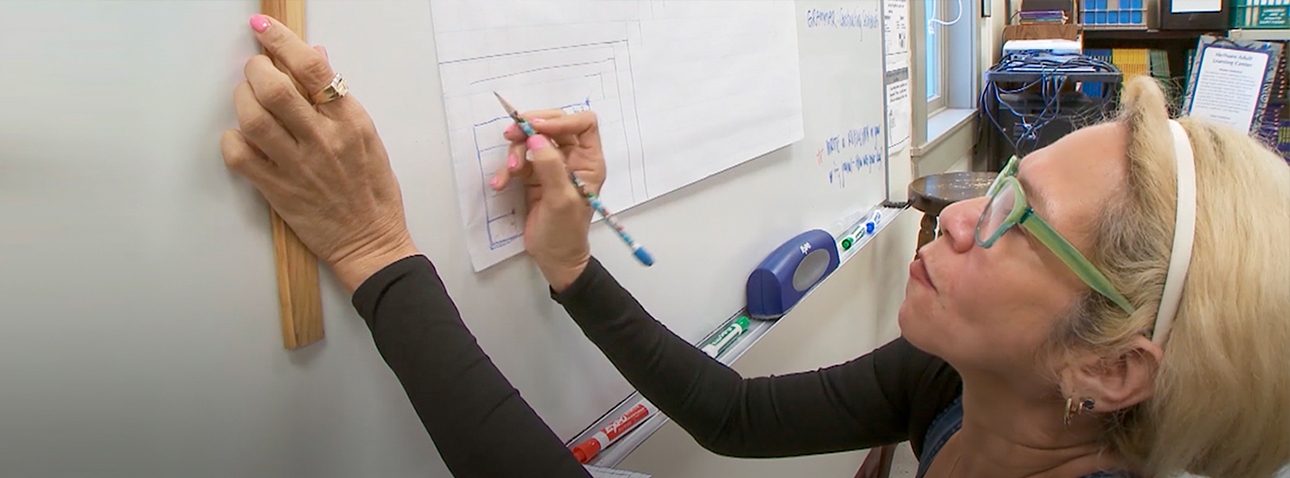
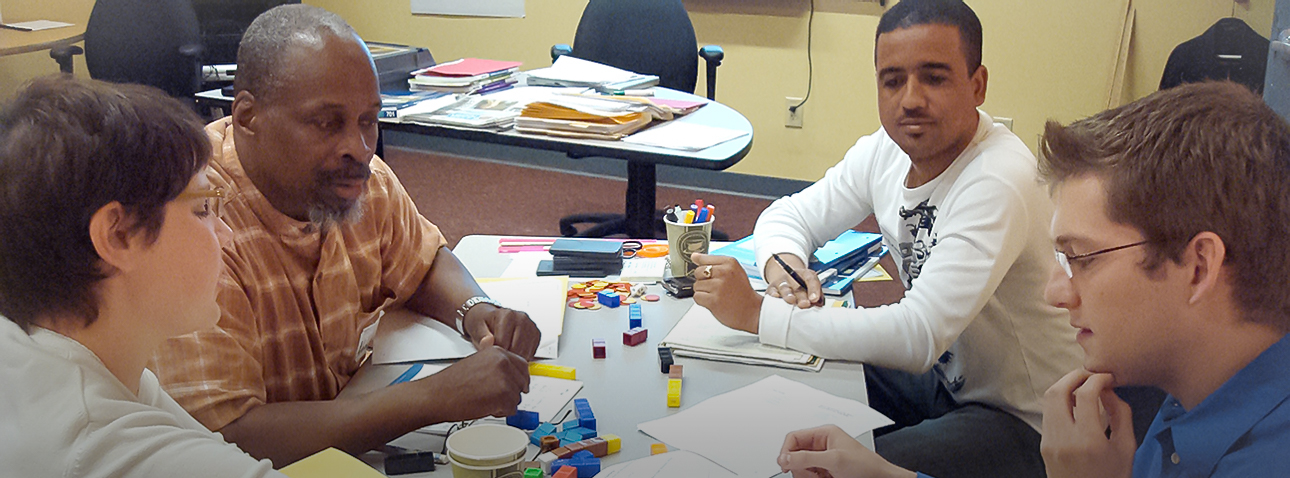
Creating engaging mathematics learning experiences has long been a focus of TERC’s work. In 2000, TERC widened its reach to include adult math learners with a major grant from the National Science Foundation to found the EMPower (Extending Mathematical Power) project. The project developed a comprehensive mathematics curriculum for non-traditional students enrolled in adult basic education, pre-GED, GED, and transitional courses to college, as well students in alternative high schools, workplace settings, or corrections programs.
The resulting published EMPower curriculum fills the tremendous need for a math and numeracy program for adult basic education. EMPower helps adults develop mathematical proficiency to more effectively engage with the world, whether that be at work, at home as parents and caregivers, in the community, or as they seek high school credentials and further education.
In order to serve adult numeracy teachers, TERC is now offering EMPower Professional Development Workshops. Teachers will expand their ideas of what it means to do math, focusing on reasoning, communication, and real-world problem solving.
Looking for resources? We now have some suggested readings to help you extend your knowledge. Click here!
We want to hear from you!
As a not-for-profit education organization, we are always looking for ways to better serve educators. We want to hear from you about your professional development challenges and the programs you need to help meet those challenges. Please consider taking this online survey. Your answers about educator professional development will help shape our offerings and improve the way we deliver our programs and services to schools and other learning environments. Your responses will be kept completely confidential.
The Statistics for Action project is
based on the premise that community groups provide a rich contextual
platform for mathematics learning. Community groups should be and
are one of the domains where adults exercise their mathematical thinking
to solve problems and communicate with others. Participants are already
engaged in a project that has high stakes, requires learning, and
increases their sense of efficacy. Community groups need ways to
maximize their effectiveness. They have limited resources, but with
more mathematical understanding (more pointed use of facts and figures),
they can make their efforts count for that much more.